
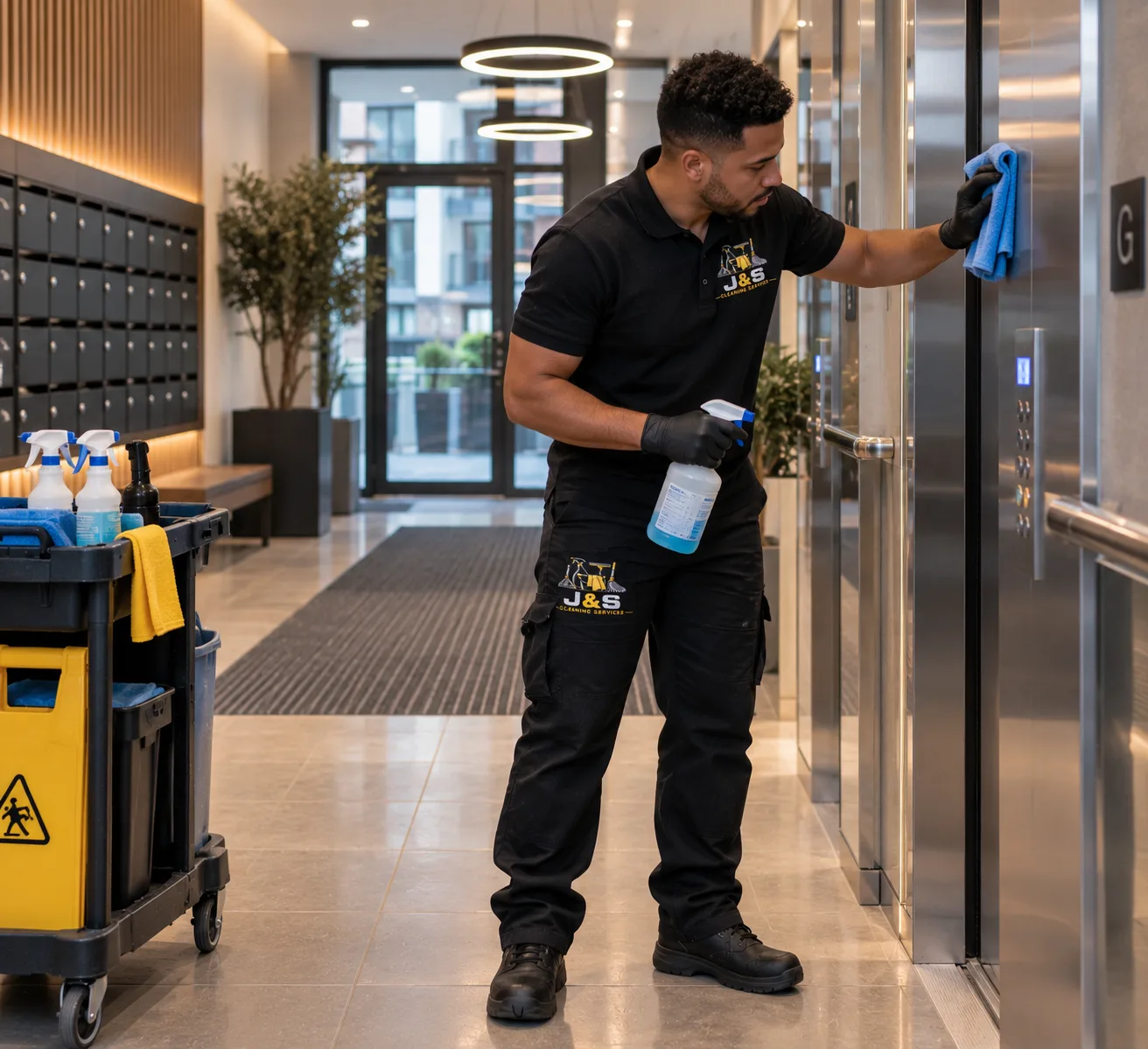
The entrance to an apartment building is the first shared space residents and visitors see. Its condition influences how the entire development is perceived—but effective block cleaning goes well beyond a tidy lobby.
Stairwells, lifts, corridors, shared glazing and bin stores all require attention. For property management companies overseeing multiple buildings, the challenge is delivering a consistent standard without spending excessive time chasing missed tasks or responding to recurring complaints.
A clear apartment block cleaning contract helps define responsibilities, set realistic frequencies and make the service easier to manage.
What should apartment block cleaning include?
Every development is different. A small building with one entrance and a staircase will not need the same cleaning programme as a multi-block development with several lifts, underground parking and busy communal facilities.
The starting point should be a site-specific schedule covering the areas the management company is responsible for.
Entrances and reception areas
Entrances receive concentrated footfall and are particularly exposed to wet weather, grit and dirt brought in from outside.
Entrance matting also needs planned care. If it becomes saturated or heavily soiled, routine vacuuming alone may not maintain its condition.
- Vacuuming or sweeping entrance floors and mats.
- Cleaning hard floors with products suitable for the finish.
- Cleaning accessible entrance glass, door frames and handles.
- Wiping intercom surrounds and other agreed touchpoints.
- Removing dust from accessible ledges and fixtures.
- Reporting damaged matting, loose fittings or recurring water ingress.
Corridors and landings
Communal corridors should be clean, presentable and free from cleaning-related obstructions.
The schedule should identify floor types and distinguish routine cleaning from periodic work. Carpeted corridors may need regular vacuuming alongside planned professional extraction. Hard flooring may require additional treatment depending on its material and condition.
Accessible skirting, door surrounds, ledges and internal glazing should be included at an agreed frequency rather than left outside the scope indefinitely.
Stairwells and handrails
Stairwells can accumulate dust, litter and grit, particularly around corners, stair edges and lower landings.
Safe working matters. Cleaners should use appropriate signage, control wet-floor risks and keep access routes clear while work takes place.
- Steps, landings and accessible stair edges.
- Handrails and agreed touchpoints.
- Accessible window sills and ledges.
- Marks on suitable surfaces.
- Cobwebs and dust within safe reach.
Lifts
Lifts are frequently used, enclosed spaces where marks and dirt can become noticeable quickly.
An agreed scope may cover lift floors, mirrors, internal panels, buttons and accessible door surfaces. Products must be suitable for the finishes, particularly stainless steel and coated panels.
Cleaning the lift interior is separate from maintaining lift machinery or carrying out technical inspections. Faults should be reported through the management company’s agreed process.
Bin stores and waste areas
Bin stores need a clearly defined scope because general cleaning, waste collection and bulky-item removal are different services.
Depending on the development and agreed arrangements, cleaning may include sweeping, removing loose litter and washing suitable floors where drainage and safe access allow.
Cleaning cannot resolve every waste-management problem. Persistent odours, damaged bins or recurring dumping may require separate action.
- Clarify who handles overflowing bins and uncollected waste.
- Confirm whether bin cleaning is included.
- Agree how dumped furniture or bulky items are reported.
- Identify who arranges pest-control support where needed.
- Confirm whether extra visits can be requested following a spill or incident.
How often should common areas be cleaned?
There is no single frequency that suits every apartment development.
The right schedule depends on the number of apartments, resident traffic, floor materials, building layout and the areas included. Buildings with several entrances may also need different frequencies for different blocks.
Dublin’s wet weather can increase the dirt and moisture carried into entrances. Seasonal adjustments may be more useful than maintaining a fixed schedule that does not reflect conditions.
- Routine cleaning: entrances, lifts, frequently used corridors, stairwells, touchpoints and visible litter.
- Detailed cleaning: accessible skirting, ledges, internal glass, fixtures and less frequently used areas.
- Periodic cleaning: carpet extraction, deeper floor cleaning, high-level work and specialist treatments.
Build a contract around the site—not a generic checklist
A useful cleaning contract should make it clear what happens, where it happens and how often.
Avoid broad descriptions such as “clean communal areas” without supporting detail. They leave too much room for different expectations between the cleaning provider, property manager and residents.
For management companies overseeing several developments, a consistent reporting format can help—even when each building has a different cleaning schedule.
- Record the task to be completed and its frequency.
- Identify the surface or material involved.
- Note any access restrictions.
- Confirm whether equipment and materials are included.
- List exclusions or separately priced work.
What should management companies ask before appointing a contractor?
The quotation should explain the service, not simply provide a total.
Compare quotations against the same scope. A lower price may reflect fewer visits, omitted areas or periodic work that has not been included.
- Has the provider inspected the development before quoting?
- Are all blocks, floors and shared facilities included?
- How are missed tasks or resident complaints handled?
- What cover is available when the regular cleaner is absent?
- How is the cleaning standard checked?
- Who supplies equipment, materials and consumables?
- What relevant insurance and safe-working arrangements are in place?
- How are additional visits and specialist work approved and charged?
Clear communication reduces repeat complaints
A cleaning service is easier to manage when there is one agreed reporting route.
Name the day-to-day contact, explain how issues should be raised and agree which concerns need immediate escalation. Cleaners should also know how to report problems they encounter, such as leaks, damaged fittings, broken access doors or signs of pest activity.
Separate cleaning issues from maintenance defects. A stained ceiling caused by a leak, damaged flooring or failed sealant may need investigation rather than repeated cleaning.
Resident feedback is useful, but recurring complaints should lead to a review of the underlying cause. Sometimes the issue is cleaning quality; in other cases, the frequency, access arrangements or original scope need adjustment.
- Every relevant block, entrance, corridor and staircase has been identified.
- Lifts, shared glazing, bin stores and other communal facilities have a defined scope.
- Routine, detailed and periodic tasks have separate frequencies.
- Floor finishes and specialist cleaning requirements are recorded.
- Access, keys, alarms and safe-working arrangements are agreed.
- Absence cover, quality checks and issue-reporting responsibilities are clear.
- Additional work requires an agreed approval process.
- The schedule can be reviewed when occupancy, conditions or resident needs change.
Discuss apartment block cleaning in Dublin with J&S
J&S provides cleaning and facilities support for managed properties across Dublin. We can discuss a common-area cleaning programme shaped around your development’s layout, footfall, access arrangements and priorities. Whether you manage one apartment block or several developments, a clear scope is the starting point for a dependable service. Call 083 073 0799 or email Service@jescleancare.ie to discuss your apartment block and communal-area cleaning requirements.
Talk to J&S