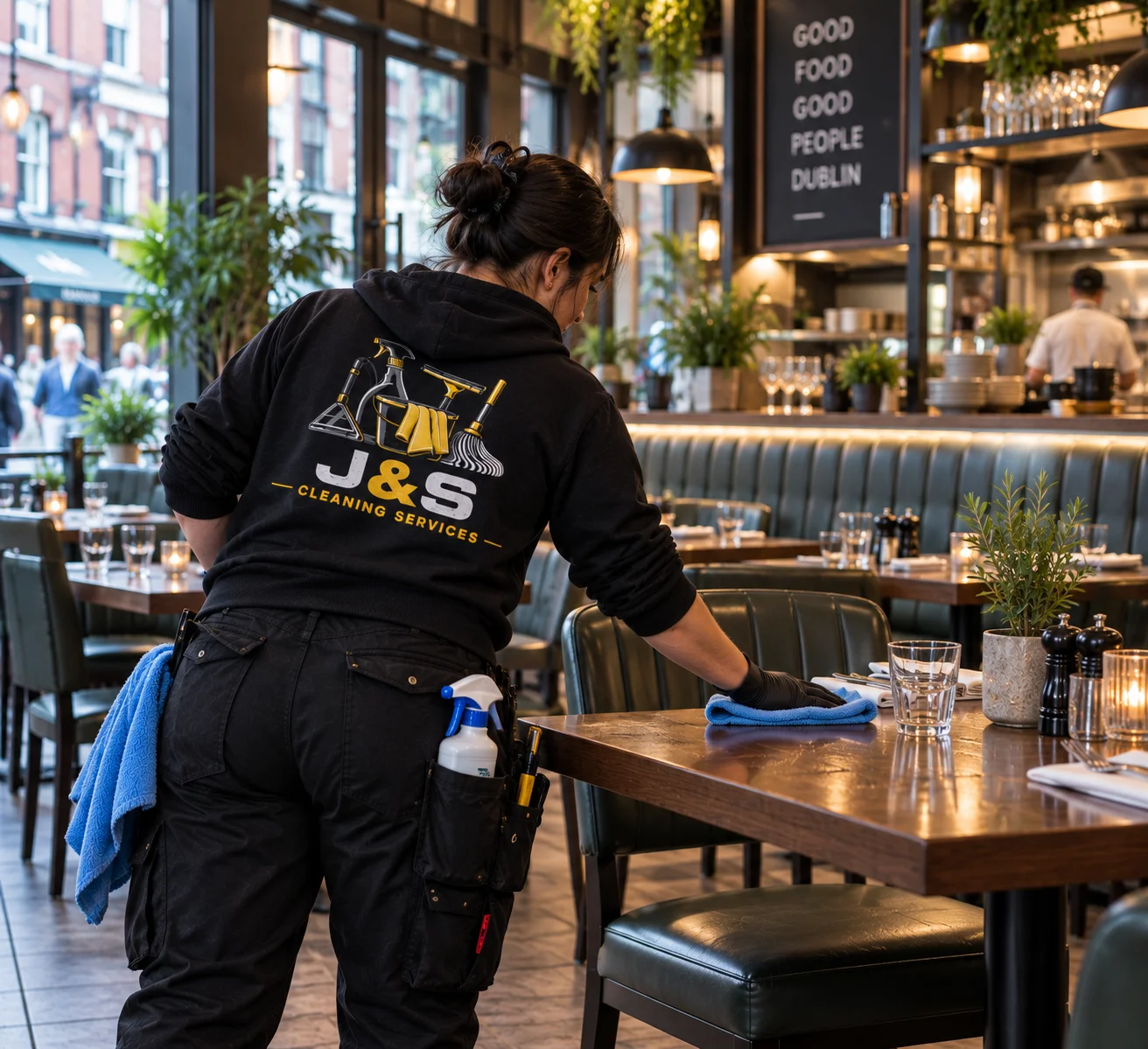
Guests notice more than the food and drinks. Sticky tables, marked glass, crumbs beneath seats and neglected washrooms affect how a restaurant or bar feels from the moment someone arrives. A good cleaning plan covers the whole venue, not just the visible surfaces before opening.
For Dublin restaurants, pubs, bars and cafés, cleaning needs to fit around preparation, deliveries, busy services and closing time. Front-of-house presentation and back-of-house hygiene have different requirements. This guide explains how to set clear responsibilities, prioritise high-use areas and prepare your venue for the next service.
1. Start with dining areas and bar counters
Tables, chairs, booth seating and bar tops need attention throughout service as well as at closing. Clear crumbs and sticky residue, check seat edges and table bases, and include the accessible spaces beneath furniture in the final clean.
Bar counters can collect drink spills, sugar residue and moisture around service points. Agree who cleans counter surfaces, drip trays and accessible shelving, and use products suitable for each finish. Remove or protect food, garnishes and clean glassware before cleaning nearby surfaces.
Follow equipment manufacturers’ instructions for payment terminals, coffee machines and other shared equipment. Avoid spraying products directly onto electrical fittings or food. Where disinfection is required, follow the product label, including contact time and any rinsing instructions. Never mix cleaning chemicals.
- Include menus, door handles and other frequently handled surfaces.
- Check mirrors, internal glass and accessible ledges for fingerprints and dust.
- Agree separate arrangements for upholstery cleaning and specialist bar equipment.
2. Give entrances and floors a practical care plan
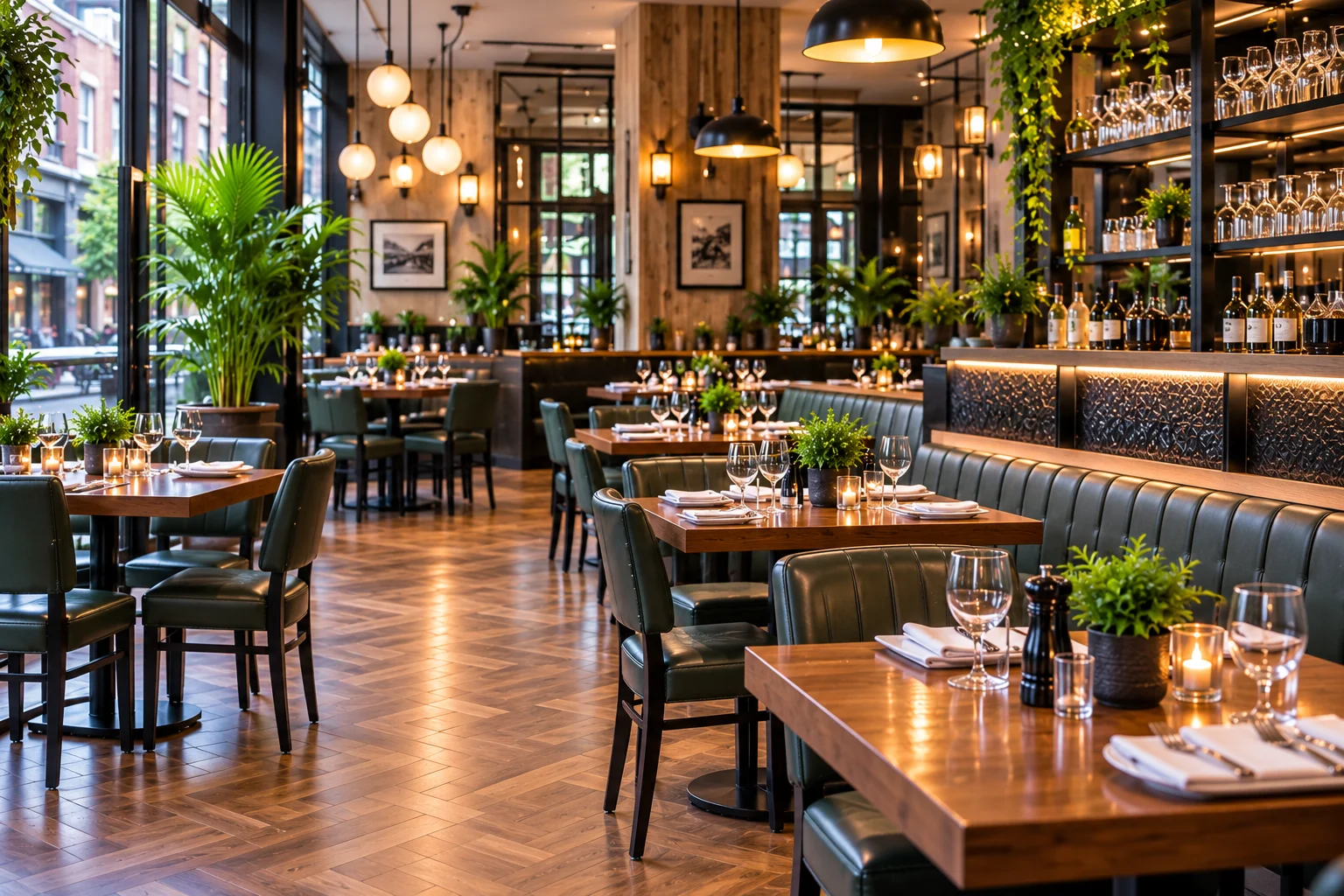
Dublin rain and street dirt can quickly affect entrances, while food debris and drink spills build up around dining and bar areas. Vacuum entrance matting, check that mats lie flat and remove loose dirt before wet cleaning.
Choose methods suited to the floor finish. Timber, vinyl, tile and natural stone need different care; excessive water or an unsuitable chemical can damage a surface or leave slippery residue. Periodic carpet extraction or floor treatments should be planned separately from routine cleaning.
Respond promptly to spills during service. Keep guests and staff away from the affected area, use appropriate warning signs and barriers, and allow the floor to dry before reopening access. Keep routes to exits clear throughout the work.
3. Check washrooms throughout service
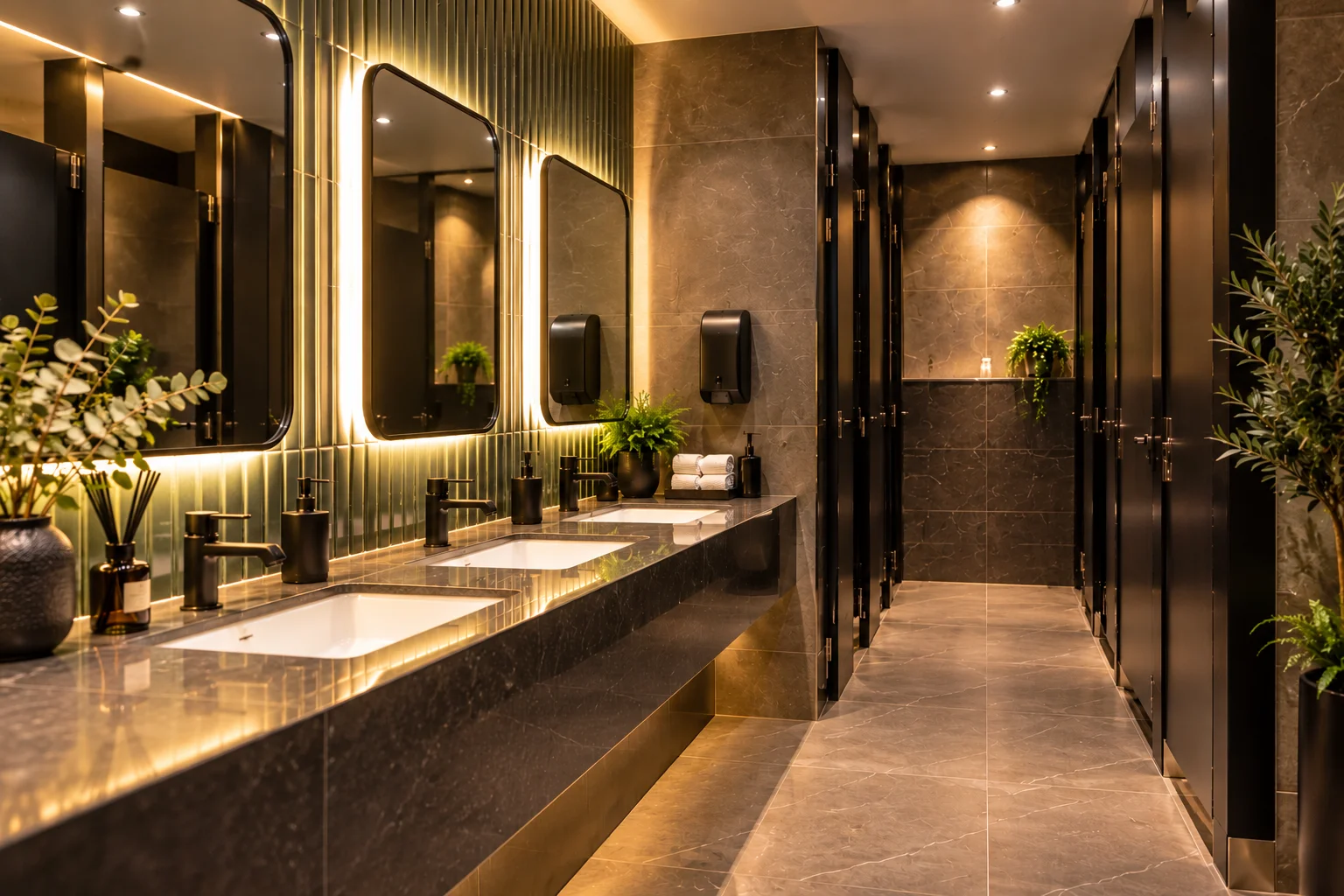
A clean dining room does not make up for a poorly maintained washroom. Include toilets, basins, taps, mirrors, handles, bins and floors in the cleaning schedule, with checks for soap, toilet paper and hand-drying supplies.
Friday evenings, weekend services and private events may need more frequent checks than quieter periods. Assign responsibility during service so spills, overflowing bins and shortages are addressed before they become recurring complaints.
Keep washroom cloths, mops and other equipment separate from those used in food preparation and service areas. Report leaks, damaged fittings, persistent odours and blocked drains to the responsible manager rather than treating every issue as a cleaning problem.
4. Define kitchen and back-of-house responsibilities
Commercial kitchen cleaning must follow the venue’s food-safety procedures and HACCP-based controls. A general premises-cleaning contract does not replace the food business’s responsibilities. Specify which tasks belong to kitchen staff, which are included in contracted cleaning and which require specialist support.
Food-contact surfaces and equipment need suitable cleaning and disinfection procedures, with products used according to their labels. Protect food and clean utensils, keep chemicals securely stored, and use separate equipment for different areas to reduce cross-contamination.
Include accessible kitchen floors, storage areas, delivery routes, staff facilities and waste areas in the agreed scope. Remove waste regularly, keep exits clear and report leaks or signs of pests. Grease-extraction systems, ductwork, beer lines and specialist equipment need separately agreed care by appropriately competent providers; do not assume these are included in a routine clean.
5. Build a daily, weekly and periodic schedule
Build the schedule around your service pattern. A lunch-led café, a late-opening bar and a restaurant running lunch and dinner have different cleaning windows. Busy weekends, events and seasonal bookings can increase the need for checks between visits.
Separate pre-opening preparation, checks during service, the closing clean and periodic deep cleaning. The following is a starting point to adapt to your venue, equipment instructions and food-safety plan.
- Before opening: check entrances, dining areas, bar counters, washrooms and supplies; confirm floors are dry and service routes clear.
- During service: clear and clean tables, respond to spills, check washrooms and remove waste as needed.
- At closing: complete the agreed floor, surface, washroom and back-of-house tasks, following the kitchen’s cleaning procedures.
- Weekly and periodically: schedule detailed dusting, internal glass, floor edges, upholstery or carpet care and separately agreed specialist work.
6. Plan access around preparation and service
Early-morning or after-closing cleaning can reduce disruption, but timing needs to account for kitchen preparation, deliveries and late finishes. Confirm keys, alarms, loading access, restricted areas and the person responsible for handover.
Leave sufficient time for floors and cleaned areas to be ready before staff preparation or guest arrival. During service, keep equipment, cables and chemicals away from guest routes and food handling. Higher-level work or specialist tasks need an appropriate safe-work arrangement.
Agree how to report damage, incomplete tasks and urgent concerns. A short manager’s walk-through before opening helps identify missed areas, access problems and maintenance issues before service begins.
7. Request a quote with a clear hospitality brief
Share your Dublin location, venue size, seating layout, bar areas, floor finishes, washrooms and service hours. Explain the split between front-of-house and kitchen responsibilities, the condition of the premises and any preferred out-of-hours access.
Ask which tasks are included in a routine visit and which are separately priced. Initial deep cleaning, windows, upholstery, carpet extraction, consumables and specialist kitchen work may have different arrangements. Confirm applicable VAT and how extra work is approved.
Agree how quality will be checked, who handles missed tasks and how the plan can change for functions or busy weekends. Compare quotations using the same areas, responsibilities and frequencies, not just the headline price.
- List dining areas, bar counters, entrances, washrooms, kitchens and storage areas.
- Agree the split between venue staff, contracted cleaners and specialist providers.
- Match food-area tasks to the venue’s food-safety procedures and equipment instructions.
- Separate opening checks, service-time tasks, closing work and periodic deep cleaning.
- Confirm secure access, chemical storage, separate cleaning equipment and waste arrangements.
- Set a pre-service inspection and a named contact for correcting missed tasks.
Need a cleaning plan for your restaurant or bar?
Tell J&S about your Dublin venue, service hours and priority areas. We can discuss a practical hospitality-cleaning scope, clarify kitchen and specialist responsibilities, and agree access arrangements around your operation.
Talk to J&S