
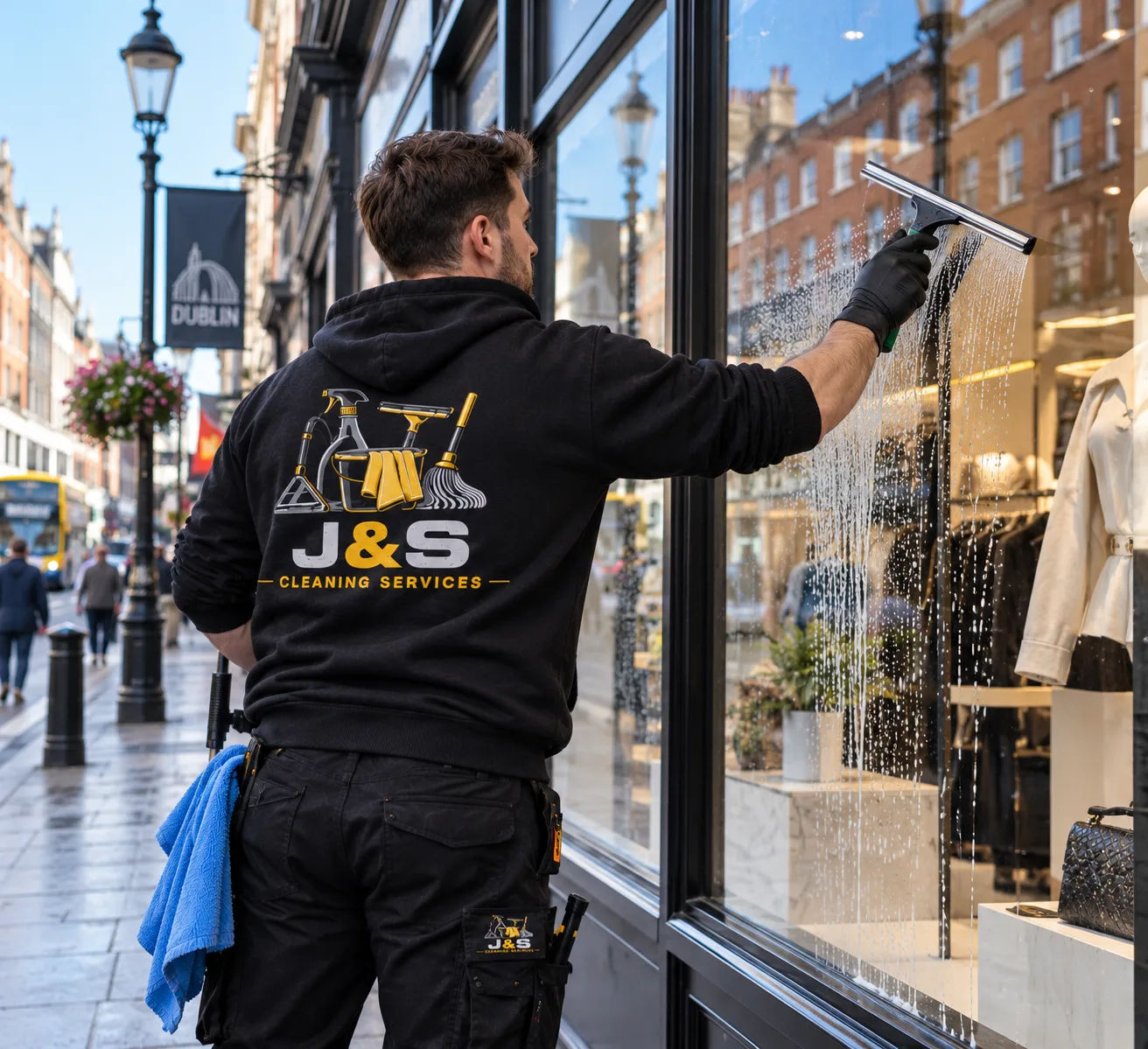
Your windows are part of how people experience your business before they step inside. Fingerprints on an entrance door, streaks across a restaurant window or dusty glass beside an office reception can make an otherwise well-kept space look neglected. Clear glass helps customers see displays and interiors as intended, and makes the premises feel better cared for.
Professional window cleaning is not simply a finishing touch. It needs a defined scope, suitable methods and a schedule that fits the building. For Dublin shops, offices, restaurants, bars and managed properties, this guide explains what to include and how to arrange the work around normal operations.
1. Start with the glass customers see first
Street-facing windows, entrance doors and display glass usually attract the most attention. Traffic-related dirt, wind-blown dust, rain marks and handprints can build up at different rates, even across the same frontage. An entrance used all day may need more frequent attention than a quieter side window.
Inspect glass from both outside and inside. Strong sunlight and interior lighting can reveal streaks that are easy to miss at another time of day. Include the edges of panes and accessible frames and sills in the agreed scope, rather than assuming a glass-only quote covers the whole surround.
For shops, protect merchandise and displays before internal cleaning. For hospitality venues, arrange work away from laid tables, food preparation and customer service. A clear frontage should support the experience inside, not interrupt it.
2. Include interior glass in the plan
An exterior clean will not remove marks on the other side of the pane. Internal windows, reception screens, glazed doors and office partitions can collect fingerprints, dust and cleaning residue. Check which surfaces are included before booking.
Assign a clear boundary between routine staff spot-cleaning and the professional visit. Staff can deal with fresh marks on safely reachable glass, while the planned service covers the agreed panes and surrounding detail. Use separate, suitable cloths and products to avoid spreading residue from other surfaces.
Restaurant and bar windows may need particular attention on the inside near busy seating or service areas. Coordinate their cleaning with the wider venue plan so furniture can be moved once and nearby surfaces protected.
3. Choose a schedule based on the premises
There is no single cleaning interval that suits every Dublin business. A busy street-facing shopfront, a restaurant with prominent glazing and an office away from passing traffic have different needs. Window size, exposure, opening hours and the presentation standard you want all influence the schedule.
Start by checking the frontage regularly and noting how quickly marks return. Agree a recurring service based on those observations, with spot-cleaning between visits where safe and practical. Review the frequency when weather, footfall or the use of the space changes.
Keep one-off requirements separate from the routine plan. A refurbishment, new tenancy or opening event may need additional cleaning; paint, adhesive and building residue require assessment rather than being treated as ordinary dirt.
4. Agree safe access before the visit
Good planning starts with knowing which windows can be reached safely. Tell the provider about upper floors, narrow pavements, entrance steps, courtyards, locked areas and any restrictions set by the landlord or building manager. Do not assume every pane is included or accessible with the same equipment.
Ask the provider to assess a suitable method and any precautions needed to keep staff and the public clear of the work. Access equipment, pavement restrictions and building rules may affect what can be done and when. If an area cannot be reached safely, it should be excluded or separately planned, not improvised on the day.
Before the visit, agree who provides access, whether a water supply is needed, and how doors and walkways will remain usable. High or difficult-to-reach windows should not become an ad hoc task for staff using unsuitable ladders.
5. Work around customers, staff and deliveries
A well-timed clean creates less disruption than one booked without considering how the premises operates. Identify busy trading periods, restaurant preparation times, deliveries and staff arrivals. Discuss a suitable quieter window with the provider rather than assuming out-of-hours access is always available.
For internal glass, clear the agreed work area and protect documents, electrical equipment, stock and nearby furnishings. Move only what can be moved safely and establish who is responsible for returning the area to normal.
Keep water, hoses and equipment out of uncontrolled pedestrian routes. Any wet-floor or access precautions should remain in place until the area is safe to use. Make sure someone on site knows the plan and can resolve access questions.
6. Identify films, coatings and existing damage
Not all glazing should be treated in the same way. Tinted films, coated glass, signage, decorative finishes and different frame materials may need specific products or methods. Share manufacturer guidance or landlord requirements where available.
Do not scrape stubborn deposits or use abrasive products without confirming they are suitable for the surface. Report paint, adhesive, mineral marks or other unusual residue in advance so the provider can assess whether specialist treatment is appropriate.
Cleaning can improve presentation, but it cannot repair scratches, damaged frames or moisture trapped inside a failed glazing unit. Record existing defects before work starts so cleaning expectations and maintenance issues remain separate.
7. Make the quote and finish easy to assess
A useful quote should identify which windows and glass surfaces are included, whether both sides will be cleaned, and whether accessible frames and sills form part of the service. Frequency, access arrangements and any excluded areas should be clear.
Compare quotes against the same scope. A low price for exterior glass only is not directly comparable with a visit covering internal partitions, entrance doors and surrounds. Send photographs and basic access details where helpful, but allow for a site assessment when the layout or reach is uncertain.
After the visit, check the agreed areas in suitable light. Look for obvious streaks, missed edges and residue on surrounding surfaces, and confirm that furniture and access routes have been restored. Raise concerns promptly through the agreed contact rather than waiting until the next visit.
Explore J&S window cleaning services in Dublin · Coordinate window cleaning with your wider cleaning service
- List the external windows, entrance doors and internal glass you want cleaned.
- Confirm whether frames, sills and surrounds are included.
- Flag coatings, films, signage, unusual residue and existing damage.
- Explain access restrictions and ask how difficult-to-reach panes will be assessed.
- Agree timing around trading, preparation, deliveries and staff movement.
- Confirm access, water requirements and who will prepare the work area.
- Set the frequency, quality expectations and contact for reporting concerns.
A clearer plan for your business’s windows
J&S provides internal and external window cleaning for Dublin businesses, homes and managed properties, with attention to accessible frames, sills and surrounds. Tell us about your premises, access and preferred schedule so we can discuss a suitable scope.
Talk to J&S