
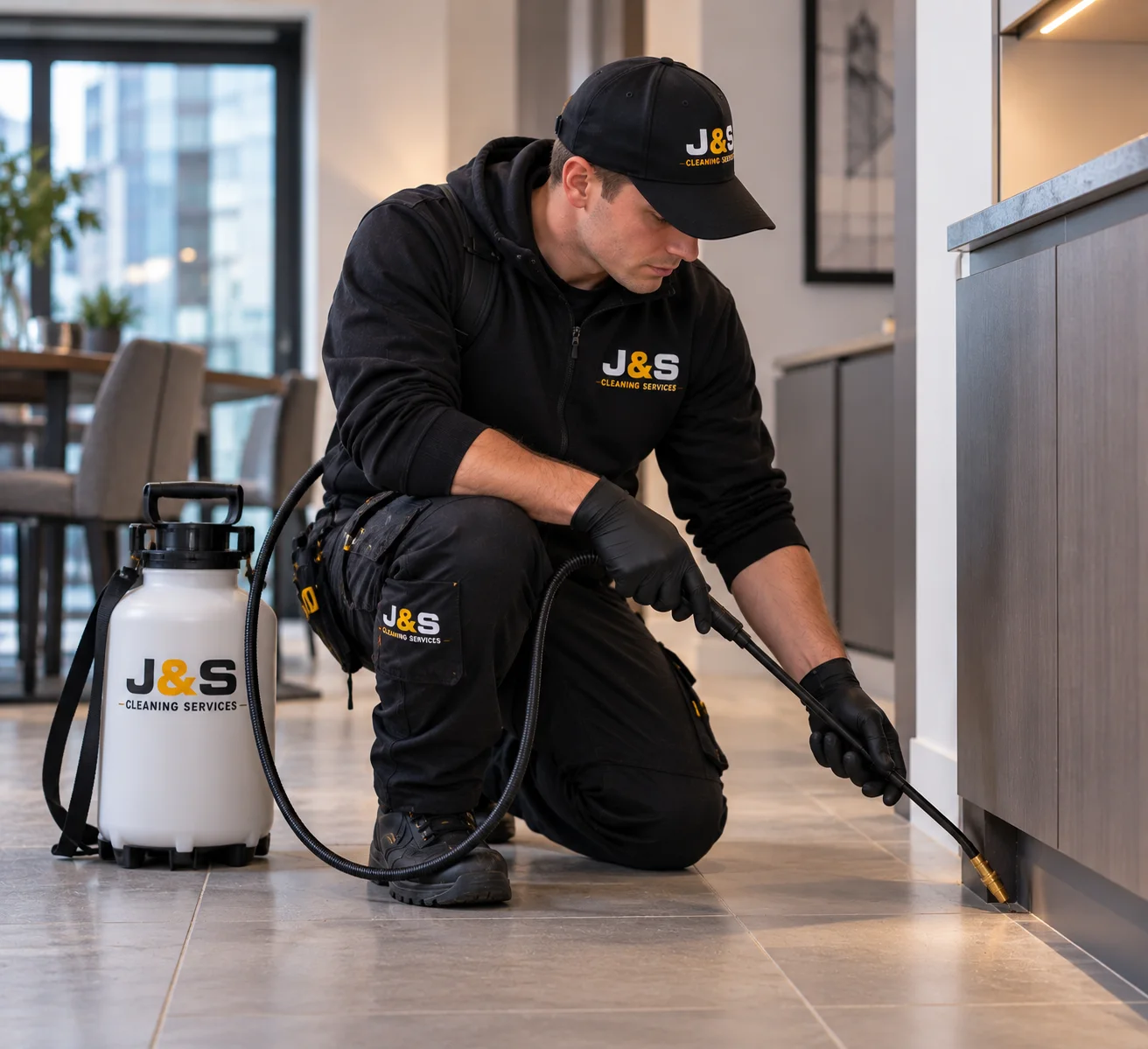
As October gives way to colder evenings in Ireland, mice and rats may seek shelter indoors, with access to food and water making a home more attractive. Kitchens, utility rooms, storage spaces and concealed gaps around a property are worth paying attention to before winter sets in.
Finding signs of rodents is not a judgement on your family home. Even a well-kept house can have an unnoticed access point. Autumn prevention means combining sensible cleaning and food storage with property checks—not simply cleaning harder. This guide explains what to check now, which warning signs to take seriously and when a professional inspection is the right next step.
1. Why colder weather makes autumn checks worthwhile
Mice and rats can be active throughout the year, but falling temperatures can encourage them to look for sheltered places. A Dublin house may offer cover as well as food from cupboards, pet bowls or household waste. You do not need to wait for a cold snap or a sighting before reviewing these areas.
Cleaning reduces accessible food and makes new signs easier to notice, but it cannot close a gap around a pipe or reliably resolve an established infestation. Check the condition of the property alongside your ordinary cleaning routine. If signs are already present, arrange an assessment rather than relying on a deep clean or stronger products.
Do not treat suspected pest contamination as ordinary household dirt. Keep children and pets away from the affected area and ask a professional how it should be handled before disturbing it. General cleaning and pest-control treatment have different roles.
2. Remove easy food sources from kitchens and family spaces
With more meals and evenings spent indoors as the weather cools, check the places your family actually uses: the kitchen, dining table, sofa-side snack spots and school-lunch preparation area. Clear accessible crumbs and spills regularly, including beneath safely movable chairs and along reachable kitchen edges.
Check areas used for packed lunches, snacks and pet feeding. Clear uneaten pet food after meals where appropriate, wash feeding bowls regularly and store pet food securely. Keep cleaning products separate from food and follow their labels, including any instructions for surfaces that contact food.
Only clean areas you can reach safely. Do not pull out heavy appliances, remove fixed panels or reach around electrical or gas connections to investigate a suspected problem. If activity appears to be coming from behind a unit, tell the inspecting professional where you noticed it.
3. Check food cupboards and stored pet food before winter
Keep dry foods in suitable, well-sealed containers and check packaging as you put shopping away. Wipe up loose flour, cereal and other spills on accessible shelves, and avoid leaving damaged or open packets forgotten at the back of a cupboard.
As you stock up for the colder months, avoid leaving forgotten packets at the back of a cupboard. Rotate older food forward and keep pet food in suitable containers with secure lids. Look for new gnaw marks, torn packets or unexplained debris. Packaging damage alone does not identify a pest, but recurring damage needs assessment.
If you suspect food or packaging has been contaminated, do not use the food. Keep it away from children and pets, and ask for advice on safe handling and disposal. Do not shake out suspect packets or spread their contents around the home while investigating.
4. Give bins and outdoor storage an autumn check
Use suitable bins with lids that close properly, avoid overfilling them and remove food waste regularly. Clean ordinary spills around the bin and the accessible floor beneath it, then let cleaned areas dry. Include the bin lid and surrounding cupboard in your routine where it is safe to do so.
Check outdoor bin lids and containers for damage before winter, keep lids shut and follow local collection arrangements. Do not leave loose food waste or torn bags beside the house. If a shared bin area is poorly maintained, raise it with the person responsible for the building; cleaning your own kitchen cannot resolve a shared waste problem.
Before putting garden items away for winter, review accessible sheds and storage areas for unnecessary cardboard and clutter. Keep entrances and visible wall edges easy to inspect without disturbing stored materials that show possible activity. Do not enter unsafe roof spaces, move heavy stacks or disturb a suspected nest as part of an autumn clear-out.
5. Check doors, pipe gaps and property defects safely
In daylight, look at reachable door thresholds, damaged seals and visible gaps where pipes or cables enter the building. Check for obvious defects around accessible vents and external doors, including a garage or utility-room entrance. Report concerns to the appropriate maintenance professional or landlord; a cleaning visit cannot repair an access point.
Report leaks and persistent damp too. Look without dismantling fittings, climbing onto roofs or reaching near live services. Keep ventilation openings, drains and other essential building features functioning as intended; do not block them in an attempt to keep rodents out. Ask a professional about suitable proofing that preserves their function.
If you suspect active pest activity, have possible entry points assessed before trying to seal them. A professional can advise what needs attention and how proofing should fit with any treatment plan. Simply closing a visible hole may leave the underlying problem unresolved.
6. Do not ignore scratching, gnawing or suspected droppings
Scratching or movement sounds at night, fresh gnaw marks, damaged food packets, sightings or what may be droppings are reasons to seek advice. They may become noticeable as rodents find shelter in colder weather, but a sound or mark alone does not confirm the cause. Record where and when it happened rather than opening up a wall, cupboard base or roof space to investigate.
If it is safe, take a photograph from a distance for the person assessing the problem. Do not touch suspected droppings, disturb nests, or sweep or vacuum suspected rodent contamination. Ask for a safe cleaning plan suited to the situation.
Avoid improvised chemical treatments or placing poisons where children, pets or other animals could reach them. Do not mix cleaning chemicals. Where treatment is needed, arrange professional advice and follow any access, preparation and re-entry instructions provided.
- Record the location and date of sightings or possible signs.
- Keep children and pets clear of suspect areas.
- Do not move contaminated items through the home to investigate.
- Explain any recent building work, leaks or recurring access problems.
- Tell the professional about pets and any areas that must remain accessible.
7. Arrange an inspection before the problem carries into winter
Do not wait until winter is fully underway if you notice a rodent, repeated scratching, fresh packaging damage or suspected droppings. Arrange an inspection, particularly if activity involves food-storage areas or a space you cannot safely assess. If you rent, notify the landlord or managing agent promptly too; clarify responsibilities and access rather than assuming.
Ask what has been identified, what inspection or treatment is proposed, and what prevention measures you can take afterwards. Confirm any instructions about children, pets, food, cleaning and returning to treated areas. Do not assume a standard cleaning product will replace the recommended treatment.
J&S coordinates pest inspection, treatment and practical prevention support for residential and other properties across Dublin. Separately, a once-off house clean can help with agreed ordinary cleaning tasks. Suspected pest contamination and any post-treatment cleaning need their own assessment and should not be assumed to be included.
Explore J&S pest-control support in Dublin · Read our once-off house-cleaning guide for family homes · Discuss an agreed scope for ordinary residential cleaning
- Clear accessible crumbs and ordinary food spills after meals.
- Store food securely and check for damaged packaging.
- Check outdoor bin lids before winter and keep food waste contained.
- Keep accessible sheds and household storage organised enough to inspect safely.
- Check reachable door seals and pipe gaps; report defects and leaks.
- Record sightings, scratching or possible droppings without disturbing them.
- Keep children and pets away from suspected contamination or treatment areas.
- Arrange an inspection promptly if signs appear; do not wait for winter or rely on cleaning alone.
Hearing scratching as the evenings get colder?
Tell J&S what you have noticed and where it is happening. We can discuss inspection and treatment coordination, autumn prevention measures and any separately agreed cleaning needs. Keep children and pets away from suspected contamination and avoid disturbing it while you arrange advice.
Talk to J&S